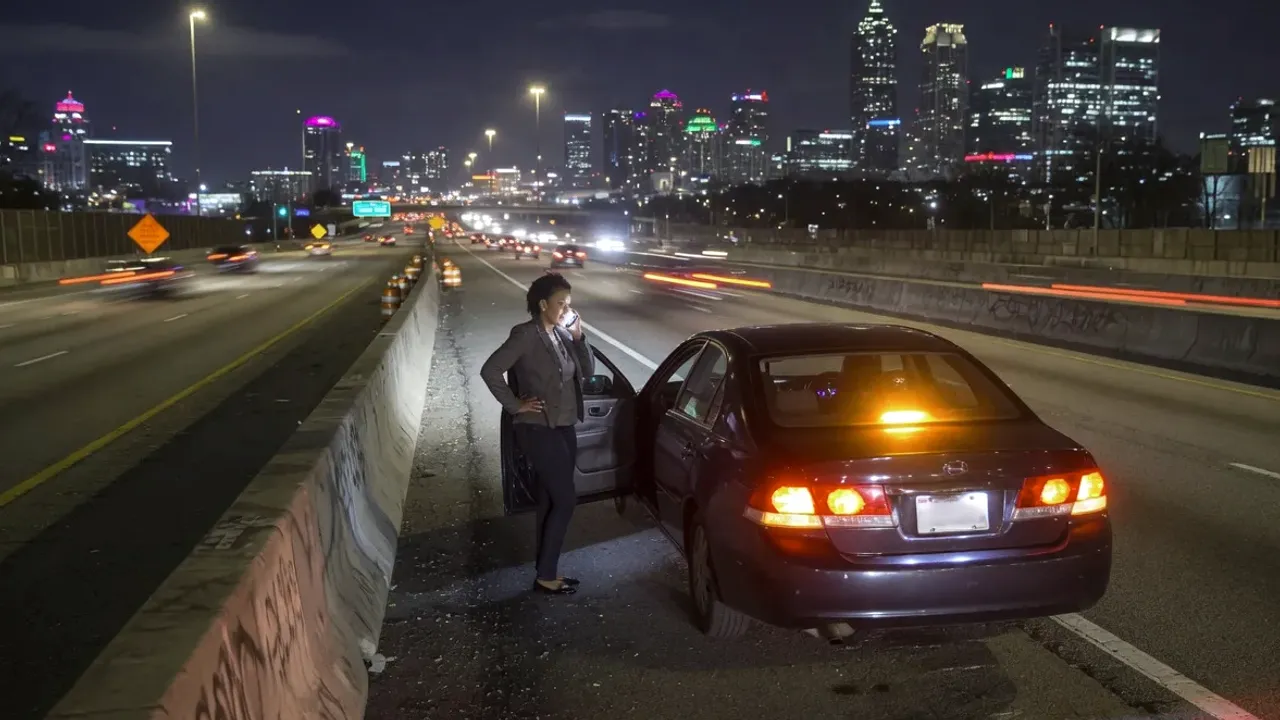
You can get a jump, a spare tire swap or a can of fuel in metro Atlanta without belonging to AAA or any other club. These are pay-per-call jobs. You ask an operator for a price for one specific job, agree to it, and pay when it’s done. No enrollment, no waiting period.
The trade-off is that you do the comparing. A membership gives you a prepaid benefit with set limits. A one-time call gives you flexibility and an upfront quote, with no price cap in the law to lean on.
Check what you already have first
Before paying anyone, look at three places you may already be covered.
- Your auto insurance. Many policies sell a roadside add-on that you may not remember buying. Read the declarations page or call the number on your card.
- Your credit card. Some cards include limited roadside help as a perk.
- Your car’s maker. A newer vehicle, or one still under a warranty program, may come with a roadside plan. The window sticker or owner’s manual says.
If one of them applies, call it and ask about the mileage limit and which services it covers. Our guide to how far AAA tows shows why limits matter. And read what car insurance covers for towing in Georgia if the plan came with your policy.
What a pay-per-call job covers
Most stranded-driver calls fall into a short list:
- A dead battery, which is a jump start.
- A flat tire where you have a good spare, which is a flat tire change.
- A tank that ran dry, which is fuel delivery.
- Keys locked in the car, which is a car lockout.
- A car that won’t move at all, which is a tow.
The full set lives on the roadside assistance without AAA page.
How pricing works on a call you asked for
Georgia caps what a company can charge for a non-consensual tow, meaning one you didn’t request, such as a private-lot removal. A roadside call you place yourself is different. It is a consensual job, with no statutory rate cap, so the price is whatever you and the operator agree on.
That makes the quote the most important part of the call. Ask for one total before anyone starts, and ask what could change it. Write down the name of the company and the number you’re quoted. This line doesn’t publish a standard price, and anyone claiming a single typical figure for every Atlanta scene is guessing.
What to say when you call
Operators need a few facts to send the right equipment:
- Where you are. A street address, a mile marker, or the nearest exit. On the interstate, say the direction of travel.
- What the car is. Year, make, model, and whether it’s an EV or diesel.
- What happened. “It clicks but won’t crank,” or “front tire is flat, no spare.”
- Whether you’re safe. Say if you’re on a shoulder or in a live lane.
If you’re on a metro freeway, the Georgia DOT’s HERO program patrols to help clear disabled vehicles. It isn’t a replacement for a jump or a repair, but it can help get you out of a travel lane.
When a membership does make sense
Be honest about the math. If you drive long distances, tow a trailer or own an older car, a prepaid plan can pay for itself in one bad week. If you rarely need help, paying only when you do is often simpler. Neither option is wrong. The mistake is paying for a plan you never read, or standing in a shoulder with no plan at all.
Calling Quick Tow ATL
Quick Tow ATL is a referral line, not a tow company. It connects you with an independent licensed operator. The line takes calls 24/7 at (858) 925-5546, and you can also use the contact page.
Frequently asked questions
Do I need AAA to get roadside help in Atlanta?
No. You can call for a single job and pay the operator directly. No account is needed.
Is a roadside call cheaper than a membership?
It depends on how often you need help. One call can cost more than a year of a plan, and a year without a call costs nothing.
Will an operator bill my insurance?
Some do and some don’t. Ask before the work starts, and keep the receipt in case you submit a claim yourself.