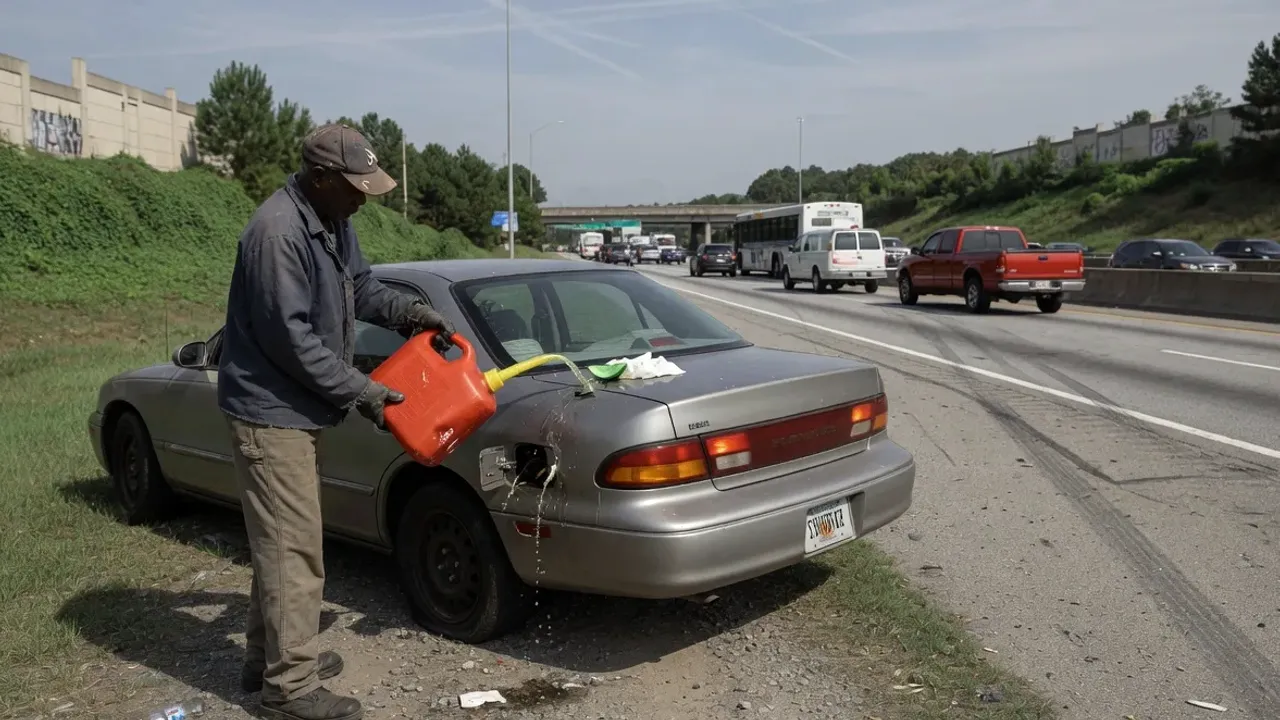
Get the car out of traffic first. Everything else, including the fuel, can wait ten minutes. A stalled car in a travel lane on I-285 or the Downtown Connector is more dangerous than an empty tank.
First, make the car safe
When the engine sputters, you often have a few seconds of momentum. Use them.
- Turn on the hazard lights.
- Steer toward the right shoulder, or the nearest exit ramp or parking lot.
- Shift to neutral if the car allows it and coast as far as you can.
- Stop as far from the lane as possible, with the wheels turned away from traffic.
- If it’s safe, get out on the passenger side and stand behind a guardrail. If it isn’t, stay buckled in with the hazards on and call.
On a metro freeway, the Georgia DOT HERO program patrols to help clear stalled vehicles. For a surface street, pull into a lot or the curb and keep the lane clear.
Don’t walk a gas can down the shoulder
Walking along I-285, the Connector or GA-400 is the worst option. Those corridors carry heavy traffic, and a person on the shoulder is easy to miss. If you’re stuck on a freeway, call for help and wait inside with the doors locked. On a quiet surface street with a station within sight, walking is reasonable, but carry a proper fuel container and not a bottle.
Your three options
Walk to a station. Fine on a quiet street within a short, safe walk. Use an approved fuel container, never a water bottle or a plastic bag, and don’t carry fuel in the car’s cabin.
Ask a fuel delivery. An operator brings enough gas or diesel to reach a station. This is a fuel delivery call. It’s a stay-put job, so the car doesn’t move until it starts. It is usually a few gallons, not a full tank.
Call a tow. If the car won’t start after fuel, or you ran dry by the wrong fuel, a roadside tow is next.
Say the fuel type
Gas and diesel don’t mix. Put diesel in a gas car and the engine will run badly or not at all. Put gas in a diesel and the damage can be costly. Tell the operator exactly what the car takes. If the car calls for premium, or is flex-fuel, mention that too.
If someone already put the wrong fuel in, don’t turn the key. Call for a tow to a shop instead.
After you get fuel
A car that ran completely empty may need a few extra seconds to restart. Turn the key to the on position, wait a moment so the pump can prime, then crank. If it still won’t start, stop, because repeated cranking strains the starter. Our car won’t start guide helps you tell a fuel problem from a battery one.
Once running, go to a station and fill up. Running very low can pull sediment from the tank into the fuel line.
What it costs
A fuel drop is a consensual call, so Georgia’s tow-rate cap doesn’t apply. The price is whatever you agree with the operator before they come. Ask for one total that includes the fuel, and ask whether the volume is stated. Our roadside assistance without a membership page explains the pay-per-call model.
Calling Quick Tow ATL
Quick Tow ATL is a referral service. It connects you with an independent licensed operator who can bring fuel or tow the car. The line takes calls 24/7 at (858) 925-5546. Give your location, direction of travel and fuel type.
Frequently asked questions
How much gas does a fuel delivery bring?
Usually enough to reach a station. Ask the operator for the amount in the quote.
Can I just push the car to a station?
Only if it’s very close, on a flat quiet street, and you have help. Don’t push on a road with traffic.
What if I’m in a parking deck?
Tell the operator which level. Fuel can often be delivered right to the car.